The Philadelphia Mint
Classic Home of American Coinage
GENERAL
2/28/20268 min read
The Philadelphia Mint: The Mother Mint and the Heart of American Coinage
There is a building in Philadelphia that has been striking coins almost without interruption since the very first years of the American republic. It has survived wars, financial panics, technological upheaval, and the complete reinvention of what American money looks like and what it is made of. Through all of it, the Philadelphia Mint has endured — producing more coins than any other facility in United States history and earning, along the way, the affectionate title bestowed upon it by numismatists everywhere: the Mother Mint.
For coin collectors, understanding the Philadelphia Mint is not merely a historical exercise. It is foundational. Nearly every major American coin series begins and ends here. The finest die engravers in the nation's history worked within its walls. And the decisions made in Philadelphia — about designs, alloys, mintmarks, and production standards — have rippled outward to define what American coinage looks and feels like to this day.
The Founding: A Nation Builds Its Monetary Identity
When the United States declared independence from Britain, it inherited a monetary mess. The colonies had used a chaotic mixture of foreign coins, paper currency of dubious value, and commodity money. One of the first great acts of the new republic was to establish a monetary system worthy of a sovereign nation — and that meant building a mint.
The Coinage Act of 1792 authorized the creation of the United States Mint and established the decimal coinage system that Americans still use today. The choice of Philadelphia as the location was an obvious one: it was the nation's largest city, its financial center, and its capital. Congress also mandated that the Mint be one of the first federal buildings constructed under the new Constitution, a deliberate signal that monetary stability was a cornerstone of the American project.
The first Mint building, a modest brick structure on Seventh Street, opened in 1792. It was not an impressive facility by any standard. Early equipment was crude, powered largely by horses and human labor, and the first employees worked under difficult and sometimes dangerous conditions — the refining process exposed workers to toxic fumes, and early mortality rates among mint workers were a grim reality. But the coins that emerged from this humble beginning were something remarkable: the first official money of a new nation.
The very first coins struck were copper half dismes and dismes in 1792, followed by silver dollars, half dollars, quarter dollars, and a range of copper denominations in the years immediately following. George Washington reportedly contributed silver from his own household to the first batches of coin metal, a story that may be apocryphal but has proven too good for history to abandon. The early coinage designs — featuring a flowing-haired Liberty and a small eagle — were rough by later standards but possessed a raw vitality that collectors today find deeply appealing.
The First, Second, and Third Mints
The Philadelphia Mint did not stay in one place. As the nation grew and coinage demands increased, the facility was rebuilt and relocated three times over the course of two centuries, each new building reflecting the expanding ambitions of the institution and the country it served.
The First Mint on Seventh Street operated from 1792 until 1833. It was cramped, technologically limited, and increasingly inadequate as the American economy expanded. Still, it produced some of the most historically significant American coins ever struck, including the Draped Bust and Capped Bust series that are prized by early American coin collectors today.
The Second Mint, completed in 1833 on Chestnut Street, was a revelation by comparison — a handsome Greek Revival building that was considered one of the finest public buildings in the country. It was here that the steam-powered coinage press was introduced in 1836, a technological leap that dramatically increased production capacity and consistency. The Second Mint presided over the Liberty Seated era, producing the classic coinage designs of the mid-19th century that defined American money through the Civil War and beyond.
The Third Mint, opened in 1901 on Spring Garden Street, was a grand Beaux-Arts structure built to handle the enormous coinage demands of a rapidly industrializing nation. It was here that many of the most celebrated American coin designs were produced, including the Morgan dollar, the Barber coinage, and eventually the Mercury dime, Standing Liberty quarter, and Walking Liberty half dollar of the early 20th century. The Third Mint also oversaw one of the most celebrated episodes in American numismatic history: the so-called Renaissance of American coinage under President Theodore Roosevelt.
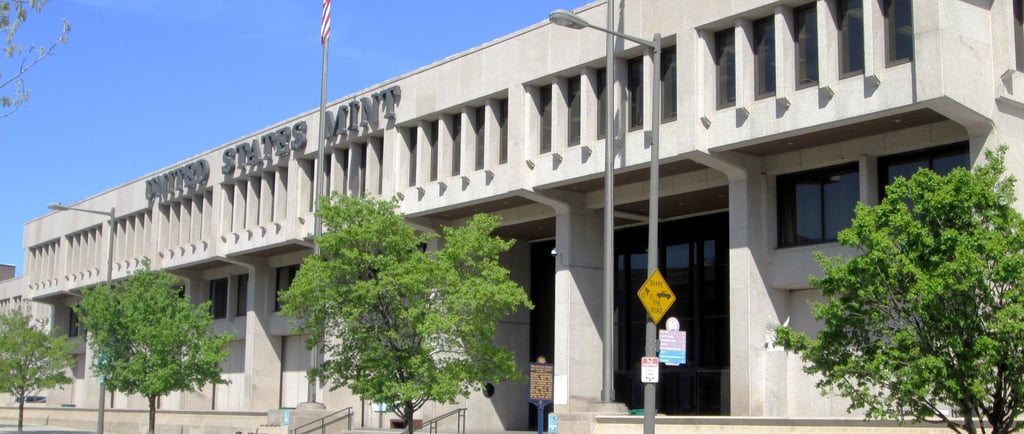
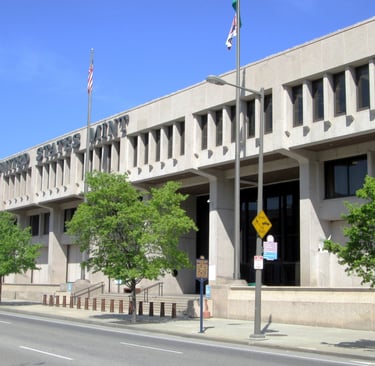
The Fourth and current Mint, opened in 1969 on Arch Street, is a modern industrial facility capable of producing millions of coins per day. It is open to the public for tours and remains the flagship of the U.S. Mint system.
The Roosevelt Renaissance and the Art of the Coin
By the early 1900s, American coinage had grown stale. The Barber designs — named for Chief Engraver Charles Barber, who created them — were technically competent but artistically uninspired. President Theodore Roosevelt, who had strong opinions about nearly everything, decided that the coins of a great nation should reflect its greatness, and he set about changing them.
Roosevelt's first move was to approach the sculptor Augustus Saint-Gaudens, widely considered the greatest American sculptor of his era, about redesigning American gold coinage. The collaboration produced the $20 Saint-Gaudens double eagle of 1907, a coin so breathtaking in its classical beauty that it is regularly cited as the most beautiful coin ever produced by the United States Mint. The obverse features a striding Liberty holding a torch against a radiant sun, while the reverse shows an eagle in full flight — a design closer in spirit to ancient Greek coinage than to anything that had appeared on American money before.
The Saint-Gaudens double eagle and the companion Indian Head eagle, designed by sculptor Bela Lyon Pratt, were struck in Philadelphia and set the tone for what became a broader redesign of American coinage. James Earle Fraser's Buffalo nickel, Adolph Weinman's Mercury dime and Walking Liberty half dollar, and Hermon MacNeil's Standing Liberty quarter all followed in the years between 1913 and 1917. This period represents the artistic apex of American coinage, and Philadelphia was at the center of all of it.
The Mintmark Question
For most of its history, Philadelphia was the only U.S. Mint that did not place a mintmark on its coins. The logic was simple and somewhat self-serving: Philadelphia was the original mint, the standard against which all others were measured, and its coins required no special identification. Branch mint coins — from New Orleans, San Francisco, Carson City, Denver, and later others — carried mintmarks to distinguish them from Philadelphia issues and to allow quality control across the system.
This absence of a mintmark became, paradoxically, its own kind of identifier. A Morgan dollar without a mintmark is a Philadelphia coin. A Lincoln cent without a mintmark — for most of the 20th century — came from Philadelphia. Collectors who know the series can read the absence of a letter the same way they read its presence.
The policy changed in 1979, when Philadelphia began striking a "P" mintmark on coins — starting with the Anthony dollar — to distinguish its output from coins struck at the West Point facility, which at that time also lacked a mintmark. Today, Philadelphia coins carry the "P" on most denominations, with the cent remaining the notable exception for much of modern production.
There is also the matter of proof coinage. Philadelphia has been the primary producer of proof coins — specially struck coins with mirror-like fields and frosted devices, made for collectors rather than circulation — since the 19th century. Proof sets from Philadelphia are among the most consistent and collectible annual issues in the U.S. Mint's product lineup, and many numismatists collect them as a running record of American coinage design year by year.
The Chief Engravers of Philadelphia
The artistic legacy of the Philadelphia Mint is inseparable from the men and women who served as its Chief Engravers. These were the individuals responsible for translating design concepts into the precise steel dies from which coins were struck, and their skill — or lack of it — was directly reflected in the quality of every coin that left the facility.
Robert Scot, the first Chief Engraver, produced the early Draped Bust designs of the 1790s and early 1800s. John Reich, his successor, brought a more refined sensibility and created the Capped Bust designs that graced American silver coinage from 1807 onward. Christian Gobrecht, who served in the 1830s, was responsible for the elegant Liberty Seated designs that became the standard for mid-century American coinage.
William Barber and his son Charles Barber between them occupied the Chief Engraver position for most of the second half of the 19th century. Their tenure was long and productive if not artistically daring, and Charles Barber's resistance to working with outside sculptors during the Roosevelt era became a source of genuine tension — Roosevelt famously went around the Mint's bureaucracy to work directly with Saint-Gaudens, in part because Barber was so hostile to outside artistic input.
James Earle Fraser, though not a Mint employee but a commissioned sculptor, left perhaps the most enduring individual mark on Philadelphia's output with his Buffalo nickel design of 1913, a coin that drew on his deep knowledge of and affection for Native American subjects.
In more recent decades, the Mint has moved toward a collaborative model, working with outside designers, artists, and sculptors on commemorative and special programs. The results have been uneven but have occasionally produced coins of genuine distinction.
Philadelphia and the Collecting Hobby
For coin collectors, the Philadelphia Mint occupies a unique position in the landscape of American numismatics. Its output spans the entire history of the republic, from the crude early coppers of the 1790s to the modern clad coinage of today. The range of what can be collected from this single facility is staggering.
Early American coinage — Flowing Hair, Draped Bust, Capped Bust — is the domain of specialist collectors, and Philadelphia issues are central to virtually every series. The prices for fine examples can be steep, but the historical resonance of holding a coin struck in the first decades of the republic is unmatched.
For collectors of classic 19th and early 20th century coinage, Philadelphia issues in the Morgan dollar, Barber, and early commemorative series offer depth and variety. Philadelphia Morgan dollars are often the most common dates in the series, but common does not mean uninteresting — high-grade Philadelphia Morgans with original luster and strong strikes are genuinely beautiful coins, and the sheer variety of date and condition combinations keeps many collectors occupied for years.
The commemorative coin programs, which began in 1892 with the Columbian half dollar and have continued in various forms to the present day, are largely a Philadelphia story. The classic commemoratives of the early 20th century — struck in Philadelphia along with the Denver and San Francisco mints — represent one of the most visually diverse and historically rich collecting areas in American numismatics.
Modern collectors should not overlook Philadelphia's ongoing production of special products: annual proof sets, silver proof sets, and the American Silver Eagle and Gold Eagle bullion programs all include Philadelphia issues. The Mint's commemorative coin program, authorized by Congress to honor specific people, places, and events, continues to produce Philadelphia-struck pieces of genuine interest.
Visiting the Mint
The Philadelphia Mint is open to the public for free self-guided tours on weekdays, making it one of the few places in the country where you can watch the actual production of circulating coinage in real time. Visitors can observe the coin-making process from an elevated gallery — from blank production through striking and bagging — and the experience offers a visceral appreciation for the industrial scale of modern coin production that no amount of reading can quite replicate.
The Mint also operates a sales area where visitors can purchase collector products, including uncirculated coin sets, commemoratives, and other special items. For a coin collector, a trip to Philadelphia without visiting the Mint is something close to a missed obligation.
A Living Institution
What makes the Philadelphia Mint remarkable is not merely its age, though 230-plus years of continuous operation is an achievement few institutions anywhere in the world can match. It is the fact that it remains genuinely relevant — not as a museum or a monument to the past, but as a functioning industrial facility producing hundreds of millions of coins every year that circulate in American commerce.
The coins in your pocket almost certainly include Philadelphia issues. The proof set in your collection was very likely struck there. The commemorative on your shelf honoring some chapter of American history passed through Philadelphia hands before it reached yours.
For collectors, that continuity is part of the attraction. The Philadelphia Mint connects the early republic to the present in a direct and tangible way. Every coin it has ever produced is, in some sense, part of a single unbroken tradition — a tradition that began with a borrowed horse, a modest brick building, and the bold idea that a new nation needed money worthy of its ambitions.
Happy collecting.