Morgan Dollars
Overview of the Classic American Silver Dollar
UNITED STATES COINS
2/27/20266 min read
Morgan Dollars: America's Most Beloved Silver Coin
Few coins in American numismatic history command the passion, loyalty, and devotion of the Morgan dollar. Large, heavy, and beautifully struck, these silver coins have captured the imagination of collectors for well over a century — and for good reason. Whether you're a seasoned numismatist or just getting started, Morgan dollars offer a rich combination of history, artistry, and collecting depth that few series can match.
A Coin Born from Political Controversy
The Morgan dollar didn't emerge from a simple desire for a beautiful coin. It was born from one of the great political battles of the Gilded Age: the debate over silver coinage.
Following the Coinage Act of 1873 — dubbed the "Crime of '73" by silver advocates — the standard silver dollar was effectively discontinued, leaving the country on a de facto gold standard. Western silver miners and agricultural interests were furious, and their lobbying eventually produced the Bland-Allison Act of 1878, which required the U.S. Treasury to purchase and coin millions of dollars' worth of silver each month.
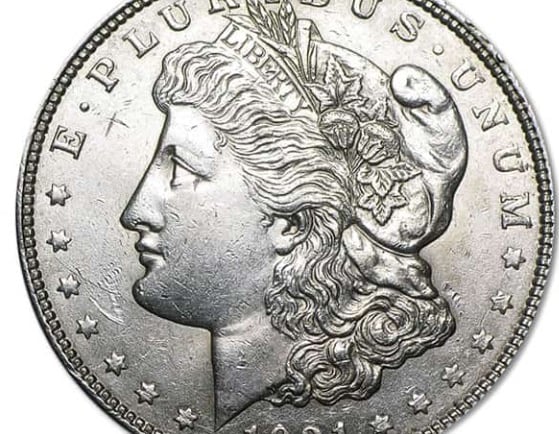
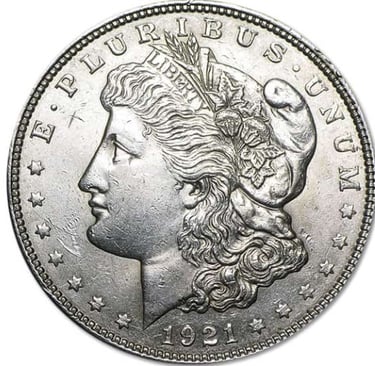
The man tasked with designing this new coin was George T. Morgan, a young English engraver who had joined the Philadelphia Mint just a year earlier. Morgan's design was striking in its ambition. For the obverse, he sought a distinctly American portrait of Liberty — not the idealized classical figure that had graced previous coinage, but something more natural and contemporary. He found his model in Anna Willess Williams, a Philadelphia schoolteacher whose profile became one of the most recognized images in American coinage history. The reverse featured a bold eagle with outstretched wings clutching arrows and an olive branch, exuding power and confidence.
The first Morgan dollars rolled off the presses in 1878, and production continued — with one notable gap — until 1921.
The Production Years and the Great Melting
Morgan dollars were struck at five different mints over the course of their production run: Philadelphia (no mintmark), New Orleans (O), San Francisco (S), Carson City (CC), and Denver (D). Each mint produced coins with subtle differences in strike quality, luster, and availability, which is a large part of what makes the series so compelling to collect.
Production was massive. The government was legally obligated to buy silver and strike it into coins, yet demand for the coins in circulation was often modest. Millions sat in Treasury vaults, some for decades, barely touched. This odd quirk of monetary policy turned out to be a boon for future collectors — many Morgan dollars survived in exceptional condition simply because they were never used.
The production gap is equally important to understand. After 1904, the supply of silver purchased under the Sherman Silver Purchase Act ran out, and no new Morgan dollars were struck for 17 years. Then, in 1921, with silver prices falling and pressure from mining interests, the Morgan dollar was briefly revived before being replaced later that same year by the Peace dollar. The 1921 issues from all three active mints — Philadelphia, Denver, and San Francisco — are common dates but notable as the end of an era.
The most significant event in Morgan dollar history for collectors, however, may be the Pittman Act of 1918, which authorized the melting of up to 350 million silver dollars to be sold as bullion to Great Britain during World War I. Hundreds of millions of coins were destroyed, permanently altering the rarity of certain dates and mintmarks. Some issues that were once common became genuinely scarce overnight.
Adding another layer to the story, the government began releasing bags of long-stored Morgan dollars from Treasury vaults in the early 1960s, flooding the market with coins that had been sitting untouched since the 19th century. This "Treasury release" is why certain dates — particularly common Philadelphia issues — can still be found in gem uncirculated condition today, while others remain elusive.
Key Dates and Rarities
The Morgan dollar series contains some of the most famous rarities in all of American numismatics, as well as a healthy number of conditionally rare coins that look common in lower grades but become extraordinarily difficult to find in mint state.
The undisputed king of the series is the 1893-S, struck at the San Francisco Mint with an original mintage of just 100,000 coins, most of which entered circulation and were heavily used. Finding one in any grade above Good is a challenge; finding one in mint state is a generational event. It's been called the "King of Morgan Dollars" with good reason.
Other major rarities include the 1895 Philadelphia issue, which exists only in proof format — no business strikes are known to survive, making it the only regular-issue year of the series that cannot be collected in circulation strike form. The 1889-CC, 1892-CC, and 1893-CC are all legitimately scarce Carson City issues that command strong premiums.
Among the more affordable keys, the 1903-O was long considered rare because few were known in circulated grades, but the Treasury releases of the 1960s revealed bags of uncirculated examples — a reminder that the coin market is never static.
Collecting Approaches
One of the great pleasures of the Morgan dollar series is that it accommodates virtually every budget and collecting philosophy. Here are the most common approaches collectors take.
Complete Date and Mintmark Set. The full series, including all dates and mint facilities, contains over 100 distinct issues depending on how you count varieties. A complete set in circulated condition is achievable for a determined collector, though a handful of key dates will require significant investment. In mint state, a complete set becomes an elite pursuit.
By Mint. Many collectors focus on a single mint, such as Carson City, which produced coins from 1878 to 1893. Carson City Morgans have a romantic frontier appeal and are almost universally popular, though that popularity is reflected in their prices.
Type Collecting. For those who want a Morgan dollar without the pressure of completing a set, a single high-grade example represents the series beautifully on any shelf or in any collection.
VAM Varieties. The Leroy Van Allen and A. George Mallis reference work cataloguing Morgan dollar varieties (giving rise to the term "VAM") opened up an entirely different dimension of the hobby. Repunched mintmarks, doubled dies, clashed dies, and other die varieties give dedicated collectors virtually unlimited depth to explore within the series.
Grading Considerations
Grade matters enormously with Morgan dollars, and understanding a few key points will serve any collector well.
Mint state Morgan dollars are graded on the standard Sheldon scale from MS-60 through MS-70, but the most important distinction for eye appeal and value is often the difference between coins with strong, original luster versus those that have been cleaned, dipped, or artificially brightened. The market places a significant premium on original, untouched surfaces, and a lightly worn coin with original skin will often be more desirable than a higher-graded coin that has been chemically altered.
Strike quality varies considerably by mint and date. San Francisco coins are generally well-struck, while New Orleans issues can be softly struck, particularly in the hair above Liberty's ear and in the eagle's breast feathers. Learning to distinguish a weak strike from wear is an essential skill.
Third-party grading services — primarily PCGS and NGC — have become the standard for higher-value Morgans, providing authentication, grading, and a degree of market confidence that makes buying and selling significantly easier. Raw (ungraded) Morgans can be excellent value for common dates, but for anything with meaningful numismatic premium, a slabbed example from a reputable grader is generally the wiser choice.
The 2021 and 2023 Revivals
The U.S. Mint surprised the numismatic community in 2021 by issuing new Morgan dollars to commemorate the centennial of the coin's original end of production. These modern issues were struck in 99.9% silver with updated privy marks representing the historical mints, along with a Philadelphia issue without mintmark. A Carson City privy mark issue followed, and the coins generated enormous collector interest — and considerable frustration, as ordering system issues left many collectors unable to purchase them at issue price.
The Mint continued with additional Morgan dollar issues in 2023. While these modern coins are separate from the original series in most collecting contexts, they've introduced a new generation of collectors to the design and history of the original coins — which can only be good for the hobby.
Final Thoughts
The Morgan dollar is, in many ways, the quintessential American coin. It's large enough to command attention, beautifully designed, historically significant, and deep enough as a series to reward decades of study and collecting. Whether you're drawn to the romance of Carson City's frontier mint, the challenge of assembling a complete date set, or simply the pleasure of holding a well-preserved piece of 19th-century American history, there is a place for Morgan dollars in almost any collection.
Start with what you can afford, learn the key dates and grading standards, handle as many examples as you can, and don't rush. The Morgan dollar series rewards patience — and the coins, as millions of collectors have discovered, have a way of becoming something more than just investments. They become companions in an ongoing conversation with American history.
Happy collecting.